

Population Health
At iBiMED, the Population Health Platform is dedicated to understanding the health patterns and outcomes within populations. Our facility supports extensive research in epidemiology, public health, and health disparities, providing the tools and expertise necessary to enhance public health strategies and interventions.
Coordination
Maria Teresa Herdeiro: teresaherdeiro@ua.pt
Our main areas of intervention:
- Study of epidemiological phenomena and determinants of health, with possible impact on Community and Family Health;
- Study of health transition phenomena and innovative measures and strategies at different levels of prevention, with possible impact on Community and Family Health;
- Study of the implementation of innovative pedagogical methodologies and strategies leading to empowerment in health matters (Health Literacy), with possible impact on Community and Family Health;
- Study of the safety and health risks associated with ecological functionality operated in different contexts of human development, with possible impact on Community and Family Health.
Comunity and Family Health
Health is a state of dynamic equilibrium of well-being that comprises the biological, psychological, social, cultural, and spiritual dimensions (WHO, 2023), and that results from the interaction established between the different systems that make up the whole and the ecological environment in which people, families, groups, and communities are inserted. in addition to exploring the knowledge of these dimensions, health research involves the study of the symbiosis of the adjustment and adaptation processes resulting from the transitions that occur in the different stages of the life cycle, as well as the relationship and effectiveness of the phenomena operated at the different levels of prevention and in the different contexts of human development.
Our mission
The Community and Family Health facility aims to promote the development and sharing of knowledge in the field of Health Sciences and Technologies, applied to the area of Community and Family Health.

EPICARE Lab
Research in pharmacoepidemiology, pharmacovigilance and pharmacoeconomics with focus on drug utilization studies. The group is particularly interested in the assessment of medicines on health and economic impact, effectiveness of health interventions and real world data management. Development of qualitative and quantitative studies, retrospective and prospective studies; ecological, cross-sectional, cohort, case-control study designs. The team is also interested in systematic reviews and meta-analyses.
Our mission:
The research group focuses on Population Health, patient safety and drug utilization studies, through projects in pharmacoepidemiology, pharmacoeconomics, and pharmacovigilance. The group research activities are supported by several nationally and internationally funded projects with the goal of contributing to the improvement of healthcare practices and public health outcomes.
Our main research areas:
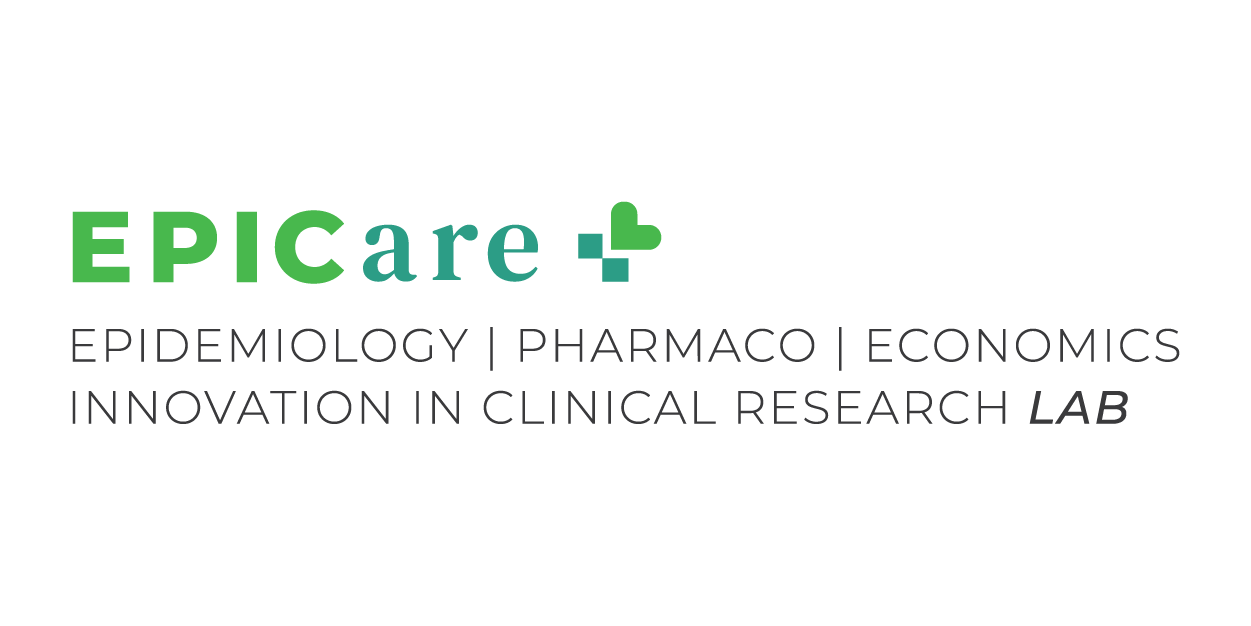
- Medication use and adherence, safety, effectiveness, and pharmacoeconomics across special populations, including children and adolescents pregnant and breastfeeding women, and older adults. In older populations, the focus is on polypharmacy, potentially inappropriate medications, drug-related iatrogenesis, and deprescribing strategies. In 2025, we became part of the founding group of Portuguese Deprescribing Network (PTDeN). Member of the management committee ENABLE CA19132 (ENABLE). The research impact is also evidenced by the contribution to the development of clinical decision support tools, including the APIMedOlder app, a finalist for the HINTT Award. Funded projects include MedElderly (SAICT-POL/23585/2016), APIMedOlder (PTDC/MED-FAR/31598/2017), and STOP-IATRO (S1/4.5/F0063). MAMP-Study (coordinated by the University of Oslo) and Medshare (coordinated by University of Uppsala) are other examples of international network collaborations in international research.
- Other important research subject is antimicrobial resistance, actually addressed as a major global public health challenge. The group studies antibiotic prescribing and use in both human and veterinary medicine, promoting a One Health approach to mitigate the emergence and spread of resistant bacteria. It also develops digital decision support tools, such as the eHealthResp app, and implements educational interventions, including workshops, outreach activities, online courses, and webinars, to encourage the prudent use of antibiotics. Funded projects include Edu4OneHealth (2022.04568.PTDC), eHealthResp (PTDC/SAU-SER/31678/2017), and PTDC/SAU-ESA/105530/2008.
- Pharmacovigilance and drug safety: the group focuses on developing strategies to increase the spontaneous reporting of adverse drug reactions by healthcare professionals and patients, assessing the impact of safety alerts on drug use, and optimizing risk communication to ensure patient safety. Member of the management committee of SAFE ICU COST Action CA24107 – Patient SAFety Related Outcome Measures in European ICUs (SAFE-ICU).
- Study of the implementation of innovative pedagogical/training methodologies and strategies leading to empowerment in e-health literacy and health perceptions in population (COVID-19 vaccination LL-20-04).
Elevating Respiratory Care and Rehabilitation Practices
Respiratory Research and Rehabilitation Laboratory (Lab3R-ESSUA)

About us
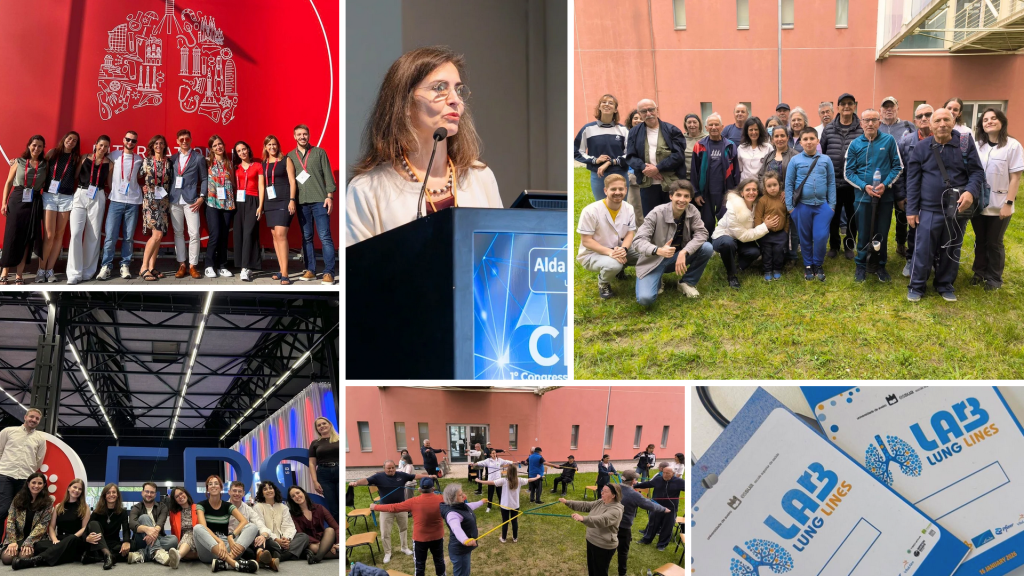
The Respiratory Research and Rehabilitation Laboratory (Lab3R) is a research facility within the School of Health Sciences and the Institute of Biomedicine at the University of Aveiro, Aveiro, Portugal. Founded in 2010 by Prof. Alda Marques, Lab3R was the first unit in Portugal dedicated to advancing knowledge in respiratory person-centred care, from mechanistic to clinical research, and to providing accessible pulmonary rehabilitation services to the community.
Since its inception, Lab3R has produced over 250 peer-reviewed publications and trained 14 PhD and 80 MSc students. The Lab3R has provided care to over 2,000 people with chronic respiratory diseases, acknowledged the role of informal carers, and strived to support them, culminating in a large and strong national and international network of collaborators, including researchers, healthcare professionals, scientific societies and patients’ and carers’ associations.
Our mission
Lab3R aims to enhance the understanding and management of chronic respiratory diseases. Its activities are organised into three main pillars:
- Research – Conducting clinical and translational research across three main branches:
- Understanding mechanisms – Exploring associations between omics data, clinical manifestations, and treatment responses, namely those to pulmonary rehabilitation, to better define disease mechanisms.
- Assessment and disease progression – Developing and validating patient-reported outcome measures and physical assessments and characterising the natural progression of respiratory diseases.
- Disease management – Examining real-world pharmacological treatment patterns to identify gaps and opportunities for optimisation; mapping healthcare structures and available services (e.g., access to pulmonary rehabilitation and workforce capacity); and improving non-pharmacological interventions, including education and exercise in pulmonary rehabilitation, long-term maintenance of outcomes, interventions for respiratory and extra-pulmonary manifestations, and the role and impact of informal carers.
- Community service – Delivering pulmonary rehabilitation and maintenance programmes in the community, improving access to this scarce intervention.
Education – Promoting learning and professional development through training and continuing education for students and healthcare professionals, including internships, seminars, workshops, courses, and congresses, while raising awareness and disseminating knowledge about chronic respiratory diseases within the community through awareness campaigns and community activities.
Our vision
Lab3R envisions a future where chronic respiratory diseases and the importance of non-pharmacological interventions, namely pulmonary rehabilitation, are fully recognised, and where people with these conditions, and those who care for them, have access to effective care to live healthier, more active, and fulfilling lives.
Key Features of Our PH Platform
Our facility is equipped with advanced technologies for analyzing large-scale health data. This includes biostatistics, geographic information systems, and health informatics, enabling detailed analyses of health trends, risk factors, and outcomes within populations.
We offer state-of-the-art resources for conducting epidemiological research. This includes the design and implementation of cohort, case-control, and cross-sectional studies, providing critical insights into the distribution and determinants of health and disease.
Our team of experienced epidemiologists, public health experts, and data analysts provides comprehensive support for all aspects of your research. From study design and data collection to analysis and policy translation, our experts ensure the success of your projects and foster collaborative research endeavors.
We adhere to stringent ethical guidelines and regulatory standards in all population health research activities. Our facility is committed to maintaining high levels of data privacy, participant consent, and ethical conduct, ensuring responsible and trustworthy scientific practices.
Get in Touch
Our research platforms at iBiMED support groundbreaking biomedical studies with cutting-edge equipment, expert staff, and high standards of care. For collaboration inquiries, more information, or partnership opportunities, we’re here to assist.